
Katherine Mansfield in the *Bibliothèque de la Pléiade* collection
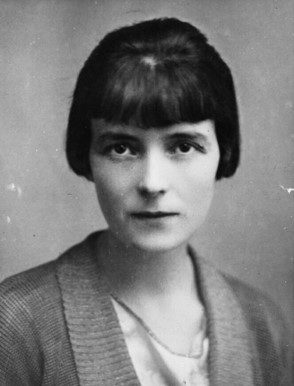
Katherine Mansfield has just received the highest recognition from the France she loved so dearly. She has been included in the *Bibliothèque de la Pléiade* collection.
The Bibliothèque de la Pléiade, published by Éditions Gallimard, is one of the most significant collections in French publishing. The literary caliber of the authors it features, combined with the high editorial quality of the critical apparatus included in each volume, has earned the collection the status of a prestigious, definitive edition. Being published in “la Pléiade” represents a form of consecration for writers—an honour few have achieved during their own lifetimes. Today, the collection includes major works not only from French literature but from world literature as well.
Katherine Mansfield who has been called “une Proust pour lecteurs pressés” (a Proust for readers in a hurry) has joined them.
Below is the AI provided life of Katherine Mansfield and her links with NZ and France.
Katherine Mansfield led an intense, nomadic existence, deeply torn between her native land—New Zealand—and the country she chose as her home and final resting place: France.
Here is how these two nations shaped her life and her work:
🇳🇿 The connection to New Zealand: A source of inspiration
Born in Wellington in 1888 as Kathleen Beauchamp, she left her homeland for good at the age of 19 to settle in London. Yet, New Zealand never truly left her.
The trauma of 1915: The death of her younger brother, Leslie—killed in France during the First World War—triggered a visceral need within her to revive their shared childhood memories.
The setting for her masterpieces: It was from Europe that she wrote her most celebrated short stories (such as “The Garden Party,” “Prelude,” and “At the Bay”). In them, she recreates a reimagined Wellington—luminous and steeped in nostalgia.
Cultural identity: Although she fled the conservatism of colonial society at the time, her writing style incorporates a wild sensibility, descriptions of local flora (such as the manuka bush), and a distinctly New Zealand approach to nature.
🇫🇷 The Connection to France: Refuge, Creation, and Destiny
For Mansfield, France served as a space for artistic freedom and romantic passion, but it was also the setting for her tragic battle against tuberculosis.
The French Riviera and Villa Isola Bella: Between 1920 and 1921, she stayed in Menton. It was in this villa that she experienced her happiest and most prolific period of writing, aided by a Mediterranean climate that brought relief to her lungs.
Paris and the Bohemian Milieu: She visited Paris on several occasions, translating Russian authors—such as Chekhov, whom she considered her ultimate master—and frequenting literary circles. There, she forged complex relationships with other notable figures, including Virginia Woolf and the sculptor Henri Gaudier-Brzeska.
The End of Her Life in Fontainebleau: In October 1922, weakened and seeking spiritual healing, she moved to the Prieuré d’Avon, near Fontainebleau, which was run by the mystic George Gurdjieff. It was there that she passed away suddenly from a pulmonary hemorrhage on January 9, 1923, at the age of only 34. She remains laid to rest in the cemetery at Avon.
By being included in the *Bibliothèque de la Pléiade* collection, this author—who was, at her core, a New Zealander—receives the highest literary recognition from the France she loved so dearly.
Katherine Mansfield, “une Proust pour lecteurs pressés”, a vécu une existence nomade et intense, profondément déchirée entre sa patrie natale, la Nouvelle-Zélande, et sa terre d’élection et de fin de vie, la France.
-
- Le traumatisme de 1915 : La mort de son jeune frère Leslie, tué en France pendant la Première Guerre mondiale, déclenche chez elle un besoin viscéral de raviver leurs souvenirs d’enfance.
- Le décor de ses chefs-d’œuvre : C’est depuis l’Europe qu’elle écrit ses plus célèbres nouvelles maîtresses (La Garden-Party, Prélude, Sur la baie). Elle y recrée un Wellington réinventé, lumineux et nostalgique.
- L’identité culturelle : Bien qu’elle ait fui le conservatisme de la société coloniale de l’époque, son style intègre une sensibilité sauvage, des descriptions de la flore locale (comme le buisson de manuka) et une approche de la nature typiquement néo-zélandaise.
-
- La Côte d’Azur et la Villa Isola Bella : Entre 1920 et 1921, elle séjourne à Menton. C’est dans cette villa qu’elle connaît sa période d’écriture la plus heureuse et prolifique, portée par le climat méditerranéen qui soulage ses poumons.
- Paris et la bohème : Elle séjourne à plusieurs reprises à Paris, traduisant des écrivains russes (comme Tchekhov, son maître absolu) et fréquentant les cercles littéraires. Elle y tisse des liens complexes avec d’autres figures comme Virginia Woolf ou le sculpteur Henri Gaudier-Brzeska.
- La fin de vie à Fontainebleau : En octobre 1922, affaiblie et en quête d’une guérison spirituelle, elle rejoint le Prieuré d’Avon près de Fontainebleau, dirigé par le mystique Georges Gurdjieff. C’est là qu’elle s’éteint brutalement d’une hémorragie pulmonaire le 9 janvier 1923, à seulement 34 ans. Elle repose toujours au cimetière d’Avon.

